Matt’s Story

When Store Security Stops You

A guy in a vest tells you to come to a back office. Maybe it happened at a mall, maybe a big-box store, maybe the grocery near your house. Your stomach drops, your face gets hot, and every instinct you have is screaming at you to explain, apologize, and make it go away.

That instinct is the single most expensive one you own, and the person in the vest is counting on it.

Here is the thing almost nobody knows walking into that room: a private store security guard acting only for the store is not a police officer. Not even a little. A private guard does not have general police powers, although Washington law recognizes limited circumstances for lawful detention or arrest. You do not have to explain yourself. What he can do is write down everything you say and hand it to the real police along with the store’s video. That is his actual job, and it works best when you help him do it.

Below are the questions people ask us after a run-in with store security — and the ones we wish they had asked before they opened their mouths. Plain English, no lecture.

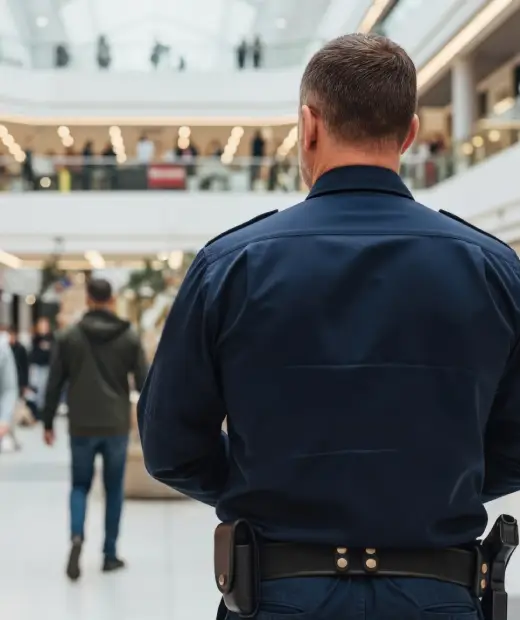
When Store Security Stops You

Common Questions About Store Security and Theft

1. Is a mall cop or store security guard an actual police officer?
Usually no. A private security guard, loss prevention agent, or “asset protection” specialist works for the store, not the government. Some stores also use off-duty police officers. The person’s actual role matters; a private guard’s job title does not give them police powers.
2. Then how can they stop me and hold me?
Washington protects stores from civil liability for certain shoplifting detentions when there are reasonable grounds, the manner is reasonable, and the detention lasts no longer than reasonably necessary to investigate. That is a limited protection, not a general police power.
3. Do they have to read me my rights?
Generally no, if they are acting only as private store employees. Miranda warnings concern custodial interrogation by police or their agents. A private guard ordinarily does not have to give that warning, and can write down what you say and pass it along. If the guard was acting with police, the analysis can change.
4. Can they search me or go through my bag?
They can ask. You can decline consent to a search of your bag or pockets. But a private guard’s lack of general police powers does not settle every question about recovering merchandise or what happens during a lawful detention. Say clearly that you do not consent, do not physically resist, and let a lawyer review what happened.
5. Can they take my phone?
A store employee is not entitled to search your phone or make you unlock it simply because they suspect shoplifting. If someone takes it during a detention, whether that was lawful depends on what happened. State that you do not consent to a search, do not fight over it, and tell your lawyer.
6. Do I have to answer their questions or sign their forms?
No to both. You do not have to explain yourself, and you should not. And you do not have to sign anything — not a statement, not a “just an acknowledgment,” not a form they call routine paperwork. Signing feels like the way out. It is usually the way in.
7. If I just explain that it was a misunderstanding, won’t they let me go?
That is the trap, and it is a good one. The friendly questions — “Did you just forget to pay?” “Is this your first time?” “Tell me what happened and we can wrap this up” — are not small talk. They are evidence collection. A guard’s promise does not bind the police or prosecutor. Do not assume that explaining yourself will prevent a criminal case. Your explanation can supply evidence the store did not already have.
8. They already have me on video. Doesn’t that mean it’s over?
It means there is evidence to review, not that the case is over. What the video actually shows matters. A statement or signed form can add evidence, so do not assume an explanation will improve your position.
9. Should I just leave? Can I walk out?
Do not run — running can turn an accusation you might beat into behavior a jury hears about. But you can calmly ask, out loud, “Am I free to go?” and ask more than once. Stay where there are cameras and other people. If they refuse to let you leave and the police are coming, wait, stay quiet, and ask for a lawyer.
10. What if I lose it and shove past them?
Don’t. This is how a forty-dollar problem becomes a criminal record. In Washington, an assault charge doesn’t require an injury — offensive contact is enough. And pushing someone while resisting a detention a court later calls lawful can be charged far more seriously than the shoplifting ever would have been. Keep your hands to yourself no matter how unfair the moment feels.
11. Weeks later I got a letter demanding money. Is that real?
Probably a civil demand letter—stores are allowed to send them, and a whole industry exists to crank them out on official-looking letterhead. Two things to know. It is a demand, not a court order; nobody has ruled on anything. And paying it does not make the criminal case go away — they are separate. Don’t pay it, don’t ignore it, don’t throw it out. Bring it to a lawyer.
12. They banned me from the store. What does that mean?
You were served a trespass notice. The practical takeaway is simple: there are other stores. Don’t go back to that one while the notice is in effect. Returning can lead to a separate criminal trespass charge; the notice and the circumstances still matter.
13. What should I actually do if it’s happening right now?
Stop walking, don’t run, stay visible. Don’t consent to a search. Don’t sign anything. Don’t say anything about the merchandise — not an excuse, not a denial, not the innocent story you’re sure will clear it up. Ask if you’re free to go. When police arrive, the whole script is two words: “lawyer, please.”
14. Do I need a lawyer for something this small?
These cases move faster than people expect — charges get filed, and demand letters go out while you’re still telling yourself it will sort itself out. A short conversation early, before you’ve talked to anyone else, is the cheapest insurance there is. Call before you decide it’s nothing.
The people who get hurt worst in these situations are almost always the ones who tried hardest to be helpful in that back office. If store security stopped you anywhere in the Greater Seattle area — arrested or not, charged or not — talk to Knauss Law before you talk to anyone else. One conversation now is worth a great deal later.