


Shoplifting Charges and Civil Demand Letters in Washington
It usually starts at the front doors before being decided in a back room. A loss prevention officer, a confession written by the mall cop for you to sign, maybe the police, maybe not. You’re told you’re banned from the store and sent home shaken. Then, a few weeks later, an envelope arrives from a law firm you’ve never heard of, in a state you may have never been to, demanding several hundred dollars — often for merchandise the store took back on the spot and put back on the shelf.
The letter looks like an exit – the end of it. Pay it, your thinking naturally goes, and it all goes away. But like much of criminal law, what looks simple rarely is. That letter has nothing to do with whether you’ll be prosecuted — it says so itself, in bold type most people never read — and how you respond to it can follow you into the criminal case. Before we get to the letter, though, start with the charge, because the charge is the part that can actually change your life.

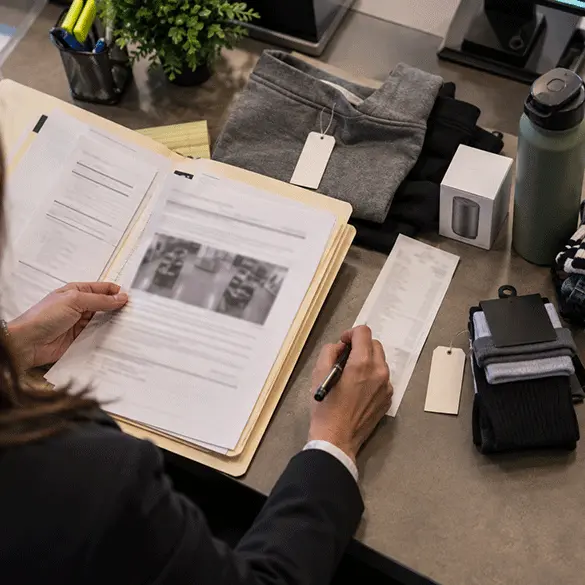
The Difference Between First-, Second-, and Third-Degree Theft
Theft in Washington: The Dollar Amount Is the Charge
Washington charges theft almost entirely by value. The conduct is the same — taking property with intent to deprive the owner of it — but the number on the price tag decides what you’re facing:
Theft in the third degree — property or services worth $750 or less. A gross misdemeanor, punishable by up to 364 days in jail and a $5,000 fine. This is where nearly every shoplifting case lands.
Theft in the second degree — more than $750 and up to $5,000. A felony.
Theft in the first degree — more than $5,000. A more serious felony.
Understand this, a misdemeanor shoplifting allegation — a candle, a shirt, a bottle of wine — carries the same maximum jail time as a DUI. Add this: prosecutors have tools to make small cases bigger: multiple incidents can be aggregated as a common scheme, turning a string of misdemeanors into a felony. The idea that shoplifting is a slap on the wrist belongs to a Washington that no longer exists.
Three Consequences of a Shoplifting Accusation
One Incident, Three Separate Consequences
A shoplifting accusation doesn’t produce one problem. It produces three, running on three separate tracks:
The criminal case — the prosecutor’s track. Charges can arrive by mail weeks or months after the incident, even if police never came to the store.
The civil demand — the retailer’s track, which is where the letter comes from.
The trespass admonishment — the store’s ban. Walk back into that store, or sometimes any store in the chain, and you can be charged with criminal trespass. A new crime, unrelated to whether the theft case goes anywhere.
People handle the track that’s loudest and forget the other two. The letter is loud. The criminal case is quiet right up until it isn’t.
Understanding Shoplifting Civil Demand Letters
The Letter: What It Is and Where It Comes From
Washington law gives a retailer the right to demand a civil penalty from an adult accused of shoplifting: the retail value of the merchandise up to a statutory cap, plus an additional penalty on top. Parents can be pursued for their minor children’s alleged shoplifting. Here’s the part that offends people most: the store can demand this money even when the merchandise was recovered at the door, undamaged, and sold to someone else the next day. Actual loss is not required.
The letters themselves rarely come from the store. Retailers hand these claims to law firms that do civil recovery in volume — thousands of letters, form language, escalating tone. The first letter demands payment. The second mentions litigation. The people sending them have, in most cases, never looked at your file beyond a name and a dollar figure. It is a business, and the business model is that a frightened person pays quickly.
The Difference Between a Civil Demand and Criminal Prosecution
Read the Bold Print: The Trap Is Printed on the Trap
Here is what almost nobody notices: Washington law requires every one of these demand letters to carry a conspicuous notice, in type as large as the demand itself:
“IMPORTANT NOTICE: The payment of any penalty demanded of you does not prevent criminal prosecution under a related criminal provision.”
The legislature made them print it because the legislature knew exactly how these letters would be read. People pay believing they’re settling the whole matter — that the check makes the criminal case disappear. It doesn’t. The retailer’s law firm has no authority over the prosecutor, no ability to drop charges, and no obligation to tell anyone you paid. The statute even says, in a different subsection, that a criminal conviction isn’t a prerequisite for the civil demand. The two tracks are independent in both directions: paying doesn’t stop the prosecution, and beating the prosecution doesn’t automatically stop the demand.
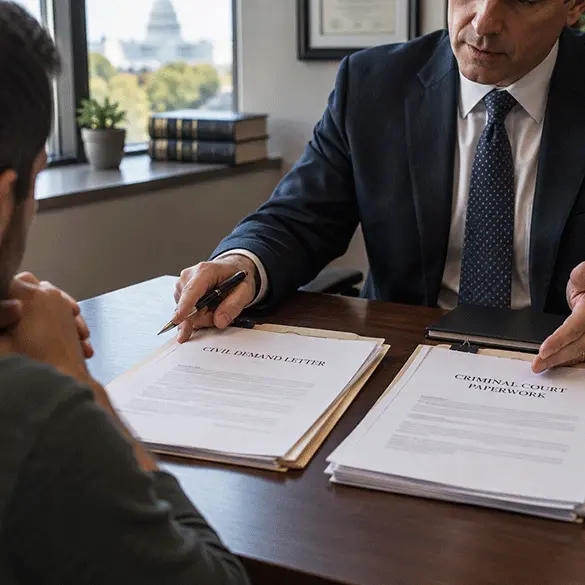

The Risks of Paying a Shoplifting Civil Demand
Why Paying Quickly Can Make Things Worse
Beyond buying nothing, a quick payment carries a risk most people never consider: it can be characterized as an admission. If your criminal case is pending — or hasn’t been filed yet — a payment made in response to a shoplifting demand is a fact the prosecution may learn about, and anything you wrote when you sent it is worse. People enclose apology notes. They call the law firm and explain themselves, on recorded lines, to collectors trained to keep them talking. Every word of that is potential evidence in a case that hasn’t even been charged yet.
This is the pattern that runs through everything we do: the system is full of moments that look like cooperation and function as confession. The demand letter is one of them.
Legal Options for a Shoplifting Civil Demand Letter
Should You Just Ignore It?
No. Whatever you do, do not consult the internet on this, it is far more complicated than it looks. Do not handle this yourself.
In some misdemeanor cases, Washington law allows the criminal charge itself to be resolved through a civil compromise with the alleged victim — one of the few places the two tracks can be made to work together instead of against you. Handled in the right order, by counsel, the money the store wants can become part of ending the criminal case. Handled in the wrong order, by you, it’s just a payment and an admission. Same dollars. Entirely different outcome. Like much of criminal law: what looks simple rarely is.
The Lasting Impact of a Theft Conviction
What a Theft Conviction Actually Costs
The jail exposure gets the headlines, but the durable damage of a theft conviction is the word itself. Theft is a crime of dishonesty — the category employers, licensing boards, landlords, and immigration authorities treat as a character verdict. It surfaces on every background check, complicates professional licenses, and for non-citizens can carry consequences far out of proportion to a misdemeanor. A first-time shoplifting allegation is frequently a resolvable problem — through negotiation, diversion, compromise, or trial. A conviction taken carelessly, to make the case go away, will have lasting effects on your future ability to get jobs, rent apartments, and take care of your family.
How We Handle Theft Cases
A Coordinated Approach to Criminal Charges and Civil Demands
We take over both tracks. On the criminal side, we examine what the state actually has — loss prevention’s account, the video, the stop itself, the value evidence that determines the degree — and pursue the outcomes that keep theft off your record. On the civil side, all communication with the retailer’s law firm goes through us, which ends the recorded phone calls and the apology notes, and lets any payment happen — if it should happen at all — on terms, with releases, and at a time that serves the criminal defense instead of undermining it.

Get Help With a Shoplifting Charge and Civil Demand Letter
Don’t Answer the Letter. Answer This Instead.
If a demand letter is sitting on your table right now, the single most useful thing you can do is nothing — no check, no phone call, no note — until someone who represents you has looked at the whole picture. The letter gives you deadlines to scare you. The criminal statute of limitations gives the prosecutor years. Only one of those clocks matters.
Call Knauss Law today. Bring the letter — and let it be the last thing you handle alone.
Knauss Law is a criminal defense firm in Washington State. We represent clients facing theft charges throughout the Greater Seattle Area.