


Fairness Is Not Built In, So You Need to Enforce It
One of the most persistent myths in criminal law is that the system is designed to be fair and occasionally fails. The opposite is closer to the truth. The system is designed to process, resolve, and close cases efficiently. Fairness is optional, fairness is aspirational, and fairness is something that only appears when someone with enough knowledge, stubbornness, and leverage makes it inconvenient not to.
No one inside the system wakes up with “be fair today” as their motto. What they wake up to are dockets, caseloads, clearance rates, plea percentages, and risk exposure. Fairness is not a structural priority. It is a byproduct — and not a reliable one. This matters because if you enter the process assuming fairness is the default setting, you will misinterpret almost everything that happens to you.

What Unfairness Actually Looks Like
Unfairness is not always loud and it rarely announces itself. It is procedural and cumulative, showing up in small decisions that quietly tilt the field. It appears when a prosecutor refuses to acknowledge evidence that complicates their theory because it “doesn’t change the charging decision,” or when a judge cuts off legitimate argument because “we’re running behind,” or when a police officer’s recollection grows more precise with each retelling, or when a defense attorney is pressured to move quickly because the calendar is crowded
None of this feels like someone standing up and declaring, “Let’s be unfair today.” It feels like routine, efficiency, momentum, and professionalism, all of which conveniently produce outcomes that favor the state.

The Problem with Expecting Neutrality
People hear phrases like “due process” and “fair trial” and assume the system is reflexively balanced, but that assumption collapses the moment pressure enters the room. It collapses when the prosecutor is evaluated on wins, when the judge is managing a calendar that would break a normal human, when police credibility is institutionally protected, and when the defense is expected to function inside the same building, same hierarchy, and same rhythms as the people trying to convict their client.
Neutrality becomes a theory and fairness becomes a performance, while outcomes start to follow incentives rather than justice. This is how cases get decided not by what happened, but by who pushes harder, who knows the rules better, and who refuses to let convenience masquerade as correctness.
The Stories That Should Make You Nervous
You see them every day on every kind of newsfeed. Cases like Arvel Marshall’s, a man who spent sixteen years in prison because no one bothered to request the full video that proved his innocence. A video that clearly showed it wasn’t him. Unfair, certainly, but not malicious – it was just something completely overlooked at the time by a prosecutor driven by his won-loss record, a defense attorney juggling a hundred cases, and a judge so long on the bench that he was jaundiced at best.
There are hundreds of high-profile examples. For every one of them, there are hundreds more, lower profile, lower-level cases with shorter sentences where the unfairness of the process, trial, sentence are never uncovered because the defendant has already served his sentence.
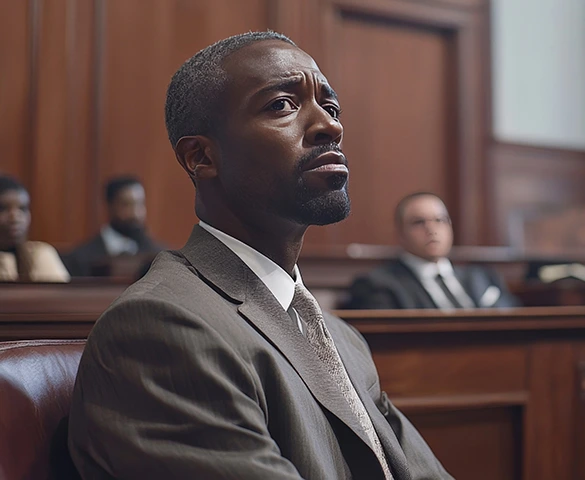
They all have one thing in common though: unfairness thrives in the absence of resistance.
Why This Matters More Than People Realize
If the prosecution is not curious about what is missing, what feels off, or what does not quite make sense, the real story never enters the courtroom. It remains invisible, untold, and irrelevant. If the person accused does not have an attorney experienced enough to recognize what is missing and aggressive enough to force it into the conversation, the case becomes a closed narrative before it ever reaches trial. That is where unfairness does its most damage — not in dramatic moments, but in the quiet acceptance of incomplete truth. Once momentum takes over, the system is not interested in fairness. It is interested in resolution.
Where Knauss Law Fits
Knauss Law does not assume fairness exists just because the rules say it should. The approach starts from the opposite premise: the process must be challenged to become fair. That means identifying where the narrative is incomplete, where the police version is too clean, where the prosecutor’s theory relies on unexamined assumptions, and where the court’s pace is overriding the client’s rights.
Fairness is not requested. It is demanded, enforced, and structured through strategy, pressure, and experience. Because in this system, fairness is not a personality trait. It is a negotiated outcome. And the people who tell you the process will “work itself out” usually have never had to survive it.
 425-300-5566