


Until Proven Innocent, Law Enforcement Will Assume You Are Guilty
This is one of the most repeated phrases in American law, and it is also one of the most misunderstood. “Innocent until proven guilty” exists as a legal doctrine, a principle recited in classrooms, court opinions, and TV courtrooms. It is not, however, how the system actually behaves. It is not how people are treated once charged. It is not how decisions get made about a person’s life while their case is pending.
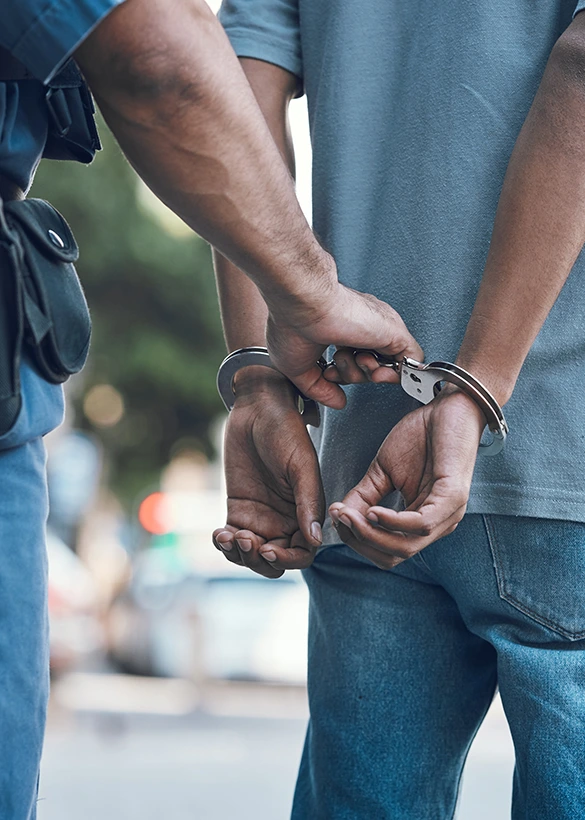
In reality, the moment law enforcement turns its attention toward you — long before any formal charge is filed and often well before you even realize you are being evaluated – the police are treating you as though you are guilty. You are not ‘innocent’ because in their view (let’s be totally honest, in many people’s view, including people you are close to) because innocent people aren’t subject to investigations or arrest.


This Is the Unfortunate Truth…
You need to understand this . . . or you will drive yourself crazy trying to undo ‘all the injustices’ in the way you are being treated. Especially when you are initially in front of a judge who will put the burden onto you to prove you can be released prior to trial – with or without a passel of conditions, all of which scream ‘you’re probably guilty.”
This is not how innocence is supposed to work. This is how presumed guilt quietly installs itself while still pretending to honor the language of fairness.
Bail decisions, conditions of release, and pretrial supervision are all built on the assumption that something dangerous might occur you go home
The system operates as though guilt is the default condition and innocence is a status that may possibly be reclaimed later, after time, money, and emotional endurance have been spent proving what should never have required proof in the first place. The presumption shifts quietly but decisively. Control precedes clarity. Restriction precedes adjudication. Regulation precedes any official determination of wrongdoing.
A former prosecutor has bluntly described it like this:” the accused are not really presumed innocent; they're usually treated as guilty from their very first court appearance. Cases get filed even when proof is thin, pressure mounts to plead, and the massive resources of the government begin closing in long before any jury ever hears the word ‘evidence.’”
The result is a system where innocence must be performed, defended, and fought for under conditions that already assume the opposite. By the time anyone utters the words “trial” or “verdict,” damage has been done, freedom restricted, reputation bruised, and leverage shifted. The legal fiction remains. The lived experience tells a very different story.
Innocent Until Proven Guilty (In Theory Only)
This is a real story: A town judge in New York was removed from the bench after openly admitting what everyone in the system pretends not to believe. While being vetted for grand jury duty, Judge Richard Snyder assured the court he treated everyone “equal, fair, honest,” then casually added: “I know they are guilty, otherwise they would not be in front of me.” When pressed on the foundational principle of innocent until proven guilty, he doubled down: “I know they’re guilty because they did something wrong. That’s how they got a ticket.” The proceedings stopped. His honesty ended his career, not because his mindset was rare, but because he said the quiet part out loud.
That same gap between theory and reality shows up everywhere else in the system. The Department of Licensing openly operates on a presumption of guilt in DUI cases, stripping licenses and imposing penalties months before any criminal adjudication occurs. Individuals appear before DOL hearing officers having been convicted of nothing, yet are forced to overcome an assumption that already treats them as impaired drivers. Punishment arrives first. The verdict becomes a technicality that may or may not follow.
“Why “Innocent Until…” Is a Bestseller Phrase
The criminal justice section of Amazon is stuffed with titles that use some form of Innocent Until Proven Guilty. The reason so many books lean on that phrasing is simple: everyone understands how fragile the concept is once the state decides you are the person to prosecute. The phrase exists because the practice does not.
The repetition of that phrase in legal literature isn’t proof of its vitality. It is evidence of its erosion. If the system truly ran on that principle in practice, no one would feel compelled to keep reminding the public that it exists.
The shift happens fast. Your arrest record spreads faster than any explanation you will ever get the chance to give. Your name enters databases. Your charge starts to color how people see you. Employers notice it. Neighbors hear about it. Family members react to it. You are no longer treated as a citizen calmly moving through a fair process. You are treated as someone the system believes might be a problem again if not closely managed.
The tone around you changes. Court staff become cautious instead of neutral. Law enforcement becomes clipped instead of measured. Even well-meaning services begin to approach you as though correction is already part of the plan. None of this is announced. It simply shows up in the way people speak to you, the way decisions are made around you, and the way assumptions quietly replace objectivity.
Language itself shifts. You stop being “a person accused of a crime” and become “the defendant,” “the respondent,” “the subject.” Your identity is filtered through procedure. Your humanity becomes secondary to your status in the system.

Why Understanding the System’s Posture Matters
This posture influences nearly every decision that follows. Judges often address you not as someone who might be innocent, but as someone who must be carefully regulated. Prosecutors tend to negotiate not as though nothing has been proven, but as though consequences are inevitable and only their severity remains in question. As time passes, that posture starts to feel normal — to the system and sometimes even to the people around you.
This is not because your situation is hopeless. It is because the system defaults to control before clarity.
That is exactly why understanding this matters. If you assume the system will naturally treat you as innocent until the end, you will misread the tone, the pressure, and the signals. Restrictions will seem temporary. The posture will feel like it will soften on its own. It rarely does without force. It changes when someone intervenes intelligently and early.
The presumption of innocence exists in trial procedure. The presumption of guilt often dominates everything that happens before it. Recognizing that difference does not mean surrendering to it. It means responding strategically instead of passively.
Where Knauss Law Fits
Knauss Law does not pretend clients are being treated neutrally until proven otherwise. It understands that the system positions people as guilty from the outset and builds early decisions around that assumption. The role of the defense is not to wait patiently for neutrality. The role of the defense is to challenge that posture, disrupt it, and replace it with reality.
That work begins early. It requires precision, experience, and control. It requires someone who knows when the system is overreaching and how to pull it back into line.
Because while the system may treat you like you need to earn your innocence back, a smart, aggressive defense makes sure you do not carry that burden alone — and makes sure that presumption does not decide the outcome.
 425-300-5566