




DUI Defense Lawyers
DUI Lawyers for Seattle, Kirkland, and King County
A DUI arrest in Washington starts two cases, not one – both of them begin before you are out of the holding cell.
One is the criminal charge. The other is the Department of Licensing's case against your driver's license, which runs on its own clock and does not care how the criminal case comes out. You have seven calendar days from the arrest to request a hearing. Most people learn that on day nine.
Most people also assume the breath test number settles the criminal case. It doesn't, and the reasons it doesn't are most of what this page is about.
Knauss Law represents people charged with DUI in Seattle, Kirkland, Bellevue, and courts throughout King and Snohomish counties. The firm is led by Matt Knauss, who prosecuted DUI cases before he defended them, and includes associate attorney Eleana Stevens and a staff whose job is to make sure no client ever has to wonder what is happening with their case.
To request a confidential consultation, call 425-300-5566 or use the contact form on this page. If you can call from the police station, do. If you are calling for someone still in custody, call now. The seven days are already running.
Last Updated: November 2026
What to Do Right After a DUI Arrest
The first days dictate much of what is to come, something most people don’t realize until it’s too late. Nothing, by the way, waits for you to be ready, it just begins. So, do this first:
- Request the Department of Licensing hearing. You have seven calendar days from the arrest. More on that below.
- Say nothing about the case. Nothing. Not to the police, friends, family, social media, or an AI chatbot. None of it can help you, and all of it can become evidence.
- Write everything down. The stop, the tests, what was said, and who was there, while it is fresh. Pen and paper, Word, typewriter, iPad, whatever works – as long as it is not with an AI bot of any kind.
- Follow every release condition exactly, including the ones that seem unfair.
- Call us before your first court appearance. That hearing is where the conditions you will live under get set.


The Seven-Day License Deadline
You have seven calendar days from the date of the arrest to request a Department of Licensing hearing. Not business days. The count does not start over when you find a lawyer.
Miss it and the administrative suspension goes forward whether or not you are ever convicted of anything. Win the criminal case later and it does not automatically give the license back.
The hearing itself is decided inside the Department by a hearing officer employing a lower standard than a criminal court uses. It usually turns on the arresting officer's paperwork. It also happens months before the criminal case gets serious, which is the reason to request it even if you expect to lose: requesting the hearing is how the report, the video, and the officer's account get pulled into the open early.
In many cases you can keep driving through an Ignition Interlock License while the license case is pending. There are eligibility rules and real costs you’ll need to understand.
More: DUI License Suspension and DOL Hearing FAQ and the firm's video, How to Request a DUI Hearing to Save Your Washington Driver's License.
Your First Court Appearance Sets the Conditions
You will hear the word ‘released’ and think it means something close to over. It does not. It means the conditions start.
An ignition interlock, installed and paid for by you before anyone has proven anything. Alcohol monitoring, leased by the day, paid for by you. Random testing, paid for by you. A drug and alcohol evaluation, sometimes for a problem you know with certainty you do not have. Classes attended during work hours. Every condition is one more thing that could be violated. Note that a violation can put you back in custody with the bar raised. It will seem as if the court has already found you guilty.
Those conditions are set at the first appearance, and they are set quickly. If no one is standing there to argue against them, the prosecutor's idea of what is appropriate becomes the court's order by default. Not because the judge agreed. Because nothing was said against it. That is why the first call should come before that hearing, not after it.
Real Truth #5: The Process Is the Punishment
"The court does not wait for final adjudication to begin regulating your life. It regulates first and justifies later."
Read Real Truth #5

Who Will Handle My DUI Case? Matt, Eleana, and the Team
A lawyer at this firm, working with a team that knows your file. Not a case manager. Not whoever happens to be free that morning.
Matt Knauss started on the other side. He interned with the Bothell City Attorney's Office, stayed on as a prosecutor after passing the bar, then prepared and tried DUI cases as an associate prosecuting attorney for a firm representing several Snohomish County cities. He later prosecuted cases for the cities of Kirkland, Medina, and Clyde Hill. Over those years he handled thousands of criminal matters, a high percentage of them DUIs, and a large part of the job was anticipating every challenge the best DUI defense attorneys would raise. He now raises them. He is a member of the National College for DUI Defense and is trained to administer the same standardized field sobriety tests officers use at the roadside.
Eleana Stevens came to the firm from the Snohomish County Public Defender Association, where she carried more than a hundred cases at a time, filed motions daily, negotiated pleas, and tried cases. She knows what a crowded DUI calendar looks like from the inside, and what it takes to keep one client's file from being treated like the forty others on the docket that morning.

Our staff handles the constant small questions a DUI case generates. When is the next court date. Did the interlock vendor send the paperwork. What does this letter from the Department of Licensing mean. Those questions get answered by people who know your file, so that when you talk to Matt or Eleana the conversation is about your case.
Every new client receives the firm's 32-page Client Manual, which lays out how the representation works at each stage: what happens next, what we need from you, and how and when you will hear from us. The standard is written down because a promise that isn't written down is a slogan.
Why a Former DUI Prosecutor's Perspective Matters
Every institutional actor in a DUI case carries career risk for being too lenient and none for being too harsh. A prosecutor who dismisses a DUI and turns out to be wrong gets a headline. A prosecutor who asks for every condition and turns out to be wrong costs someone else fourteen months of interlock fees, and nobody writes about that. The same arithmetic governs the bench.
The defense attorney is the one participant whose incentives point the other way.
Matt Knauss spent years on the side of that arithmetic that files the charges. He knows which parts of a DUI file a prosecutor worries about because he used to be the one worrying about them, and he knows how a case gets built because he built them. That knowledge is most useful early, while the record is still being assembled.
He also knows what the first week feels like from the driver's seat. In his second year of law school, on a cold night at the spot where a highway ends and the speed limit drops without much warning, he was stopped at forty-nine in a forty. Two beers across a few hours. Twenty minutes on the shoulder, a flashlight in his eyes, and an internship with a prosecutor's office starting in a few weeks. The officer eventually let him go. Had he been charged, he almost certainly would have won.
He would have beaten the charge but lost the years anyway.
That is the arithmetic every client is doing in the first week, usually without the vocabulary for it. It is why the first conversation here does not open with a pitch. The full story: All Criminal Law Firms Have 'Empathy' and My Traffic Stop: A DUI That Almost Was.
What We Review When Evaluating a DUI Case
Before anyone here talks about a plea, trial, or any potential outcome, we read the case the way the prosecutor will. Then we read it the way the prosecutor won't.
- The reason for the stop. Police need reasonable suspicion to pull a car over. A stop built on a hunch can take much of what followed with it.
- The police report against the video. The report is what the officer chose to write down. Dashcam and bodycam footage is what happened. We compare them, line by line, because they disagree more often than people realize.
- The field sobriety tests. They are voluntary in Washington and they are subjective. We look at how they were explained, the footing, the lighting, the weather, and the age, injuries, and nerves of the person asked to perform them. Sober people fail them regularly. Read more: Field Sobriety Tests in Washington DUI Cases.
- The breath test, treated as what it is. Every breath test is an experiment, and we examine it like one: the maintenance and calibration records for that specific machine, how many tests it has run, the breath temperature it assumed rather than measured, whether an officer can be heard on video saying keep blowing, and when the sample was taken relative to the stop.
- The blood draw, if there was one. Blood usually requires a warrant, which means there is a record of what the officer told a judge to get it, and a chain of everyone who handled the sample afterward. All of it is reviewable.
- The implied consent warning. You are supposed to be told what taking or refusing the station test means before you are asked. Whether that warning was given, and given correctly, is one of the first things we check.
- Your own timeline. What you ate, when you stopped drinking, and when you were tested. Alcohol is still being absorbed for a while after the last drink, which means the number at the station can be higher than the number at the wheel.
- Your medical history. Acid reflux, diabetes, asthma, a hiatal hernia, and the medications for them can move a test result or mimic signs of impairment. Read more: Medical Distress or DUI? It's Not Always Clear.
- Any prior. A prior DUI only counts if it falls inside the lookback period and resolved in a way the law treats as a prior. That is not always obvious from the paperwork, and it changes everything about the sentence.
- What you cannot afford to lose. A license, a job, a professional license, a security clearance, an immigration status, firearm rights. That last item on the list isn't evidence. It decides which outcomes are acceptable.
Real Truth #13: Prosecutors Only Know What Police Tell Them
"The prosecutor's understanding of the case is built almost entirely from police reports, officer narratives, summaries, and evidence packages created by the very people whose conduct may later come into question."
Read Real Truth #13
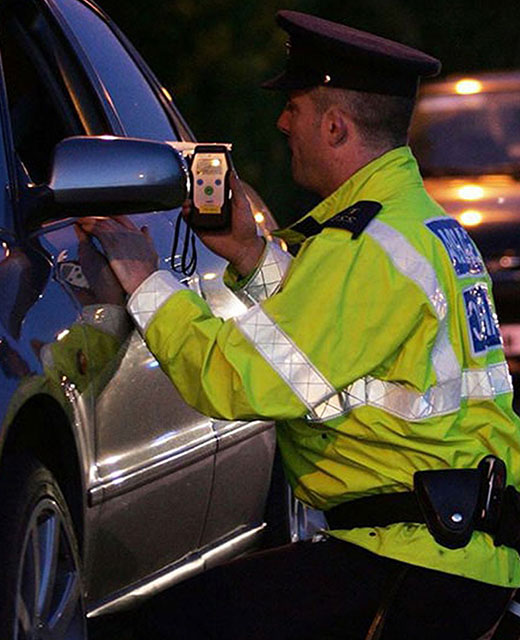
The Breath Test Number Is Where a DUI Case Starts, Not Where It Ends
The machine in nearly every Washington police station prints a number to three decimal places. Everyone downstream of it, from the prosecutor to the judge to the jury, is inclined to treat that number as a fact.
It is not necessarily so. Breath tests are scientific experiments run by a non-scientist with no interest in any of the variables that could make it wrong. The machine assumes every person who blows into it has a breath temperature of 34 degrees Celsius while a single degree of difference moves the result by roughly six and a half percent. A low-grade fever does that. So does a hot car or twenty minutes of stress on the shoulder of a highway. There is a minimum sample and no maximum, which means the longer you blow, the higher the number climbs. The fuel cell that does the measuring wears out with use yet the machine is checked only once a year to confirm – not to recalibrate - that it hasn't failed yet.
None of that means a particular reading is wrong. It means a particular reading deserves examination, and it is the piece of evidence most people assume is settled.
Read the full piece: Every Breath Test Is an Experiment and the companion Breath Test Frequently Asked Questions.
Awards
Recognized for Outstanding Results


The DUI Cases We Handle
Every DUI is a DUI until you look at it closely. Then it is one of these.
First DUI.
Most first-time clients have never been in trouble of any kind. The stakes are the same anyway.
First Offense DUISecond or multiple DUI
The sentence stops being negotiable at the end, which moves everything that matters to the beginning, starting with whether the prior counts at all.
Second DUI Charges FAQBlood test cases
A warrant, a draw, a lab, a chain of custody. Each is a place to look.
Blood Test DUIRefusals
There are three different tests in one DUI stop, given about twenty minutes apart by the same officer under completely different rules. Only one carries a penalty for refusing.
Breath and Blood Test Refusal FAQHigh BAC
A higher reading raises the stakes. It does not make the reading more reliable.
High BAC DUIDrug and prescription DUI
Impairment by drugs is an officer's opinion before it is anything else.
Driving Under the Influence of DrugsDUI involving a collision or injury
Physical control
You did the responsible thing and slept in the car. Washington can still charge it.
Physical ControlOut-of-state drivers
Arrested here, licensed somewhere else, and now dealing with two states.
Out-of-State DUIFelony DUI
Felony DUIProfessionals and licensed workers
When the conviction is the smaller problem.
DUI and Professional LicensesLicense reinstatement
License ReinstatementConsequences and Possible Outcomes
What a Washington DUI Can Cost You
No one can tell you your sentence on day one. Not us, not anyone, because it depends on facts nobody has seen yet. What we can tell you is what is on the table:
- Up to 364 days in jail, with mandatory minimums that rise with priors and with the test result or a refusal.
- Fines up to $5,000, plus court costs, probation fees, and treatment fees.
- A license suspension running from 90 days to four years depending on your record and whether you refused, and there are two separate ways to lose your license: through the Department of Licensing and through the court.
- An ignition interlock for a year on a first offense, five years on a second, ten on a third, with installation, monitoring, and calibration billed to you throughout.
- Three years of SR-22 insurance filings.
- An alcohol and drug assessment, and whatever it recommends.
- Up to five years of probation.
- On a second DUI conviction, loss of firearm rights that does not lift when probation ends.
- A permanent record. A DUI conviction in Washington cannot be vacated.
The full breakdown, including how the penalties change with priors: DUI Penalties in Washington.

What the Right Outcome Looks Like
The best available result runs the full range from a dismissal to a suppression ruling that empties the state's case to a trial or negotiated resolution to a lesser charge that preserves a license, a job, or a professional license. Deferred prosecution, where dependency is genuinely part of what happened, entered early enough to change what a prosecutor is willing to consider.
None of those is a lesser version of the others. They are answers to different questions that rely on a myriad of circumstances. The question beneath it all, however, is always the same: what is the best possible outcome available to our client based on the facts, right now.
Hoping for a dismissal is not naive. Sometimes it is exactly the right hope. Nobody can tell you on day one whether it is a real one, because that answer requires three things: your story, the state's narrative, and the evidence. Any lawyer telling you how this ends before all three are in hand is guessing or selling.
Fees and What Working With Knauss Law Involve
Most DUI matters are resolved with a flat fee. Some, depending on complexity and how long the case is likely to run, require a deposit with hourly billing once the initial phase is complete. We quote a fee once we understand the facts, because a number quoted before that is arbitrary, and the quote comes with a written breakdown of what it covers and when it is charged.
The fee covers regular, predictable communication from the firm at every stage; experienced trial counsel; a case analysis built on your facts rather than a template; motion practice when it is called for; pretrial negotiation; and trial preparation and representation.
More: Our Fees and Why Knauss Law Doesn't Accept Prepaid Legal Plans.
Working with the firm means a written standard, not a sales promise: the Client Manual described above, a direct line to the attorney handling your case, and a staff that keeps you informed about dates, documents, and next steps from the first call to the last hearing.
Why Police Officers Send Their Friends and Families Here
Some of the people who refer DUI clients to this firm are current and retired police officers. They have watched a great many DUI cases from the other side of the courtroom, and they can tell you in their own words why they send people here: Why Police Officers Trust Us with Their Families and Why Do Police Officers Refer Us?.
Matt Knauss has been selected to the Super Lawyers list for Washington criminal defense and holds a 10.0 Avvo rating. Client reviews: Google Reviews.
DUI Frequently Asked Questions
Talk to Knauss Law
If you were arrested for DUI anywhere in the Greater Seattle area, the seven days started on the day of the arrest. Call Knauss Law at 425-300-5566, from the station if you can. Matt, Eleana, and the team will get the license hearing requested, start pulling the record, and be ready before your first court appearance rather than after it.
- Phone: 425-300-5566
- Email:
This email address is being protected from spambots. You need JavaScript enabled to view it. - Office: 4020 Lake Washington Blvd NE, Suite 310, Kirkland, WA 98033
- Hours: Monday through Friday, 9 a.m. to 5 p.m.
Knauss Law is a criminal defense firm in Washington State. We represent clients facing DUI, physical control, and other criminal charges throughout the Greater Seattle area.
 425-300-5566
