


How License Reinstatement Works
Here is the single most important fact about license suspensions in Washington: suspensions do not end on their own. Ever. There is no date on which your license quietly becomes valid again. The suspension period ending only means you’ve become eligible to reinstate — and until you actually do it, driving is still driving while license suspended. People get charged with a crime every day in this state for driving on a suspension that, as far as the calendar was concerned, was over. It is one of the reasons driving while license suspended is the most charged crime in Washington State.
The DOL will not call you when you’re eligible. It will not send a congratulations letter. The system that was so prompt about taking your license is in no hurry to hand it back. Getting it back is on you — and this guide covers how, depending on how you lost it.
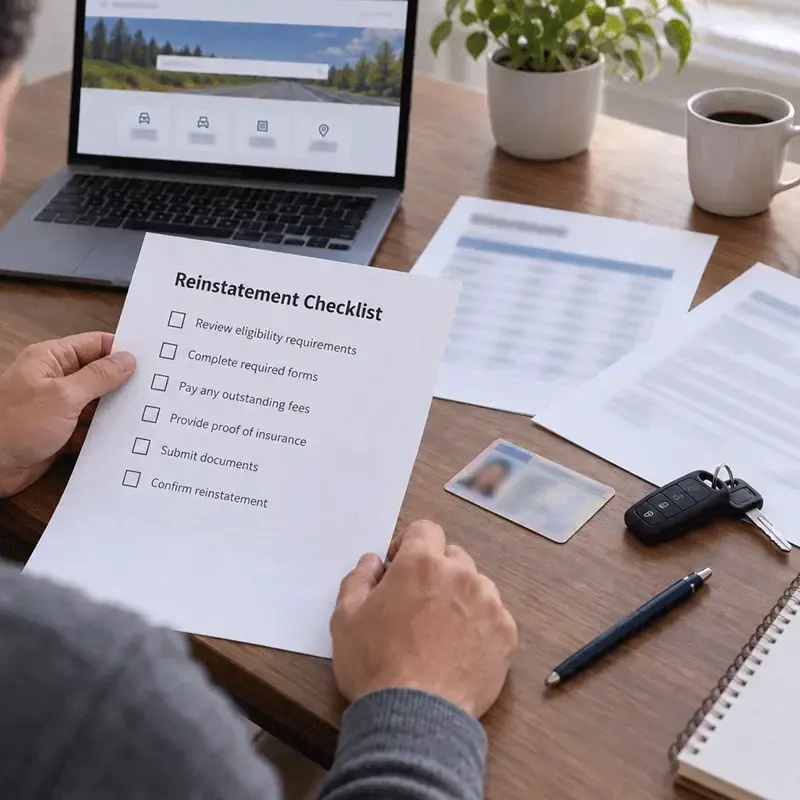

Step Zero: Find Out Exactly Why You’re Suspended
This sounds obvious. It isn’t. Suspensions pile up, stack, in fact. A person can be suspended for a DUI, for an unanswered ticket in a municipal court they’ve forgotten about, and for a lapsed insurance filing — all at once, from three different sources. Clearing one does nothing about the others, and plenty of people have paid a reinstatement fee, walked out believing they were legal, and been arrested a month later on a suspension they didn’t know existed.
Before anything else, get the full picture: request your driving record and a reinstatement requirements letter from the DOL, or check your status through the DOL’s online License eXpress system. The requirements letter lists every hold on your license and what each one demands. It is the map for everything that follows — and it’s also where you confirm the DOL has your current address, because every deadline in this process arrives by mail, at the address on file, whether you live there or not.
If You Were Suspended Over Tickets, Missed Hearings, or Unpaid Fines
Administrative suspensions are the most common and, usually, the most fixable. The suspension exists because a court reported you to the DOL — for not responding to an infraction, missing a hearing, or failing to comply with a citation. The fix runs back through the same door:
Contact each court that reported you and resolve what it wants — payment, a payment plan, or a new hearing date.
Get the court to report your compliance to the DOL. This is the step people skip. Paying the court doesn’t clear the suspension; the court telling the DOL you paid clears the suspension.
Pay the DOL’s reinstatement fee and confirm your status shows valid before you drive.
If there are warrants attached to the missed hearings, those need to be quashed — addressed and cleared — as part of the same process. This is one of the places where having a lawyer make the calls changes the experience considerably: courts hear “I’m trying to fix this” differently from counsel than from a defendant, and consolidating obligations across multiple courts is exactly the kind of tedious, procedural work that determines whether reinstatement takes three weeks or eight months.

If You Were Suspended for a DUI or Physical Control
Alcohol and drug-related suspensions come with the longest checklist. Depending on your case, getting back to a full license typically requires:
Serving the full suspension or revocation period — or driving through it legally on an ignition interlock license, covered below.
Filing proof of financial responsibility — the SR-22 — and keeping it in place, typically for three years.
Completing the alcohol or drug assessment from a state-certified agency, and whatever education or treatment the assessment called for, with compliance reported to the DOL.
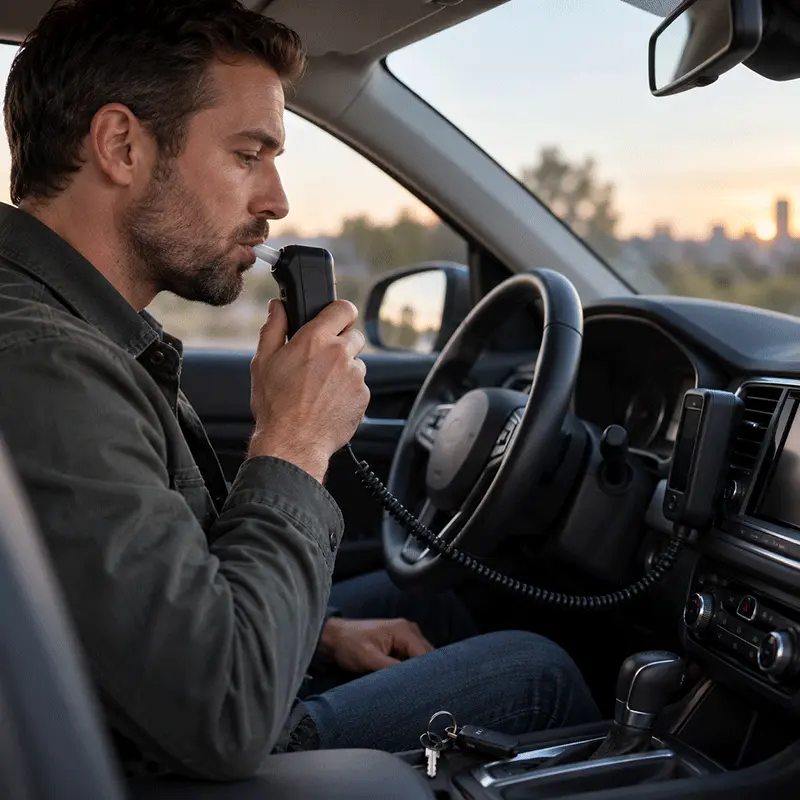
Meeting any ignition interlock device requirement, including proof of installation — and, before the device comes off, a compliance certificate showing a clean final stretch without violations.
Paying the reinstatement fee — and in revocation cases, potentially retaking the knowledge and driving tests.
Every item on that list reports into the DOL separately, and the DOL acts on what it has received, not on what you’ve done. The gap between “I completed treatment” and “the DOL has the compliance form” is a gap people have been arrested inside of. Confirm, in writing or in License eXpress, before you drive.
The Ignition Interlock License: Driving Legally During the Suspension
For most DUI-related suspensions, Washington offers a way to keep driving the entire time: the ignition interlock license, or IIL. Install an approved interlock device in the vehicles you drive, file the SR-22, submit the application and fee, and — once the DOL approves it — you can drive throughout the suspension period. To work, to school, anywhere. It is not a hardship license with route restrictions; it’s a license with a device.
Three things about the IIL that people learn too late:
Apply early. You can apply as soon as you receive notice of the suspension, and processing takes time. The goal is an IIL that’s active the day the suspension starts, with no illegal gap.
It isn’t available for every suspension. Habitual traffic offender revocations and child-support suspensions don’t qualify, and it never covers commercial vehicles.
Skipping it has a hidden cost. If you were eligible for an IIL and didn’t get one, the law treats you as ineligible to reinstate — which is precisely what turns a driving-while-suspended stop into a more serious second-degree charge. The IIL isn’t just transportation. It’s legal protection.
The SR-22: The Quietest Way to Lose Your License Twice
The SR-22 is a certificate your insurer files with the DOL proving you carry the required coverage. What makes it dangerous is what happens when it stops: if the policy lapses or is canceled, the insurer notifies the DOL, and the DOL suspends your license again — automatically, by mail, to the address on file. No hearing, no drama.
People discover it at a traffic stop, three months after a missed payment, and now they’re facing a fresh DWLS charge on a license they fought to get back. If you carry an SR-22 obligation, treat that policy like a court order, because functionally it is one.
If You Were Revoked as a Habitual Traffic Offender
The seven-year habitual offender revocation has its own doors, and we cover them fully on our habitual traffic offender page. In short: if the offenses behind the revocation were driven by alcoholism or addiction, the DOL may stay the revocation for someone making satisfactory progress in approved treatment — and after four years, anyone can petition for early reinstatement on a good and sufficient showing. Neither happens automatically, and both are applications that are won or lost on documentation. If you’re four years into a seven-year revocation and your record is clean, you may be closer to driving than you think.
The Order of Operations Matters
If there’s a theme running through all of this, it’s sequence. The court reports to the DOL, then you pay the fee. The device gets installed, then the application goes in. The compliance form arrives, then the status changes. Do the steps out of order and you’ll pay twice, wait longer, or — worst case — drive on a license you sincerely believe is valid and collect a criminal charge that restarts the whole cycle. And if you have a pending charge right now, timing matters even more: walking into a negotiation with a reinstated license, or a visible path to one, is one of the most valuable things a defendant in a driving case can do.
How We Help
We work closely with you to figure it all out. It’s as simple as that. This gets complicated quickly, we uncomplicate it with your help. If needed, we quash warrants, negotiate with the courts holding your license hostage, handle IIL timing, and prepare habitual offender stay applications and four-year petitions. We do, with you, what’s needed to clear your license.

Contact Knauss Law for License Reinstatement Help
The System Won’t Hand It Back. Take It Back.
A suspended license costs people jobs, and the scramble to keep working without one is how a suspension becomes a criminal record. The way out is procedural, unglamorous, and entirely doable — but nobody at the DOL is going to start it for you.
Call Knauss Law today. Bring the requirements letter — or we’ll get it — and we’ll map the way back.
Knauss Law is a criminal defense firm in Washington State. We represent clients charges throughout the Greater Seattle Area.