


What The Pitt Gets Right About Electronic Monitoring in the Criminal Justice System
The Pitt might be a huge medical show hit that routinely spins off questions about how accurate it is but it really nailed a continuing problem in criminal justice.
In the first season's penultimate episode, there's a mass casualty event that takes over the entire ER and results in every shift being called it. There are not enough monitors to go around so only the most critical patients are hooked up the 'the machines.' Patients are stabilized and left until an OR is open. In that chaos, the sounds the monitors make are increasingly important - perhaps the only warning that something is going wrong.
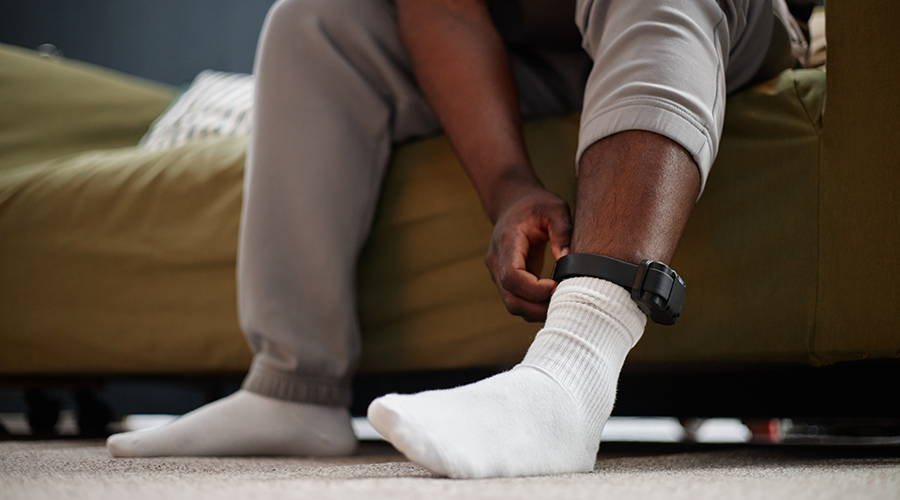
When the Ankle Monitor Starts Failing
Also in the middle of the chaos was Dr. Cassie McKay. McKay wears an ankle monitor. In previous episodes, it' s gone off despite the fact she is precisely where she is supposed to be - in the ER helping patients. The sound is hair-raising. She calls the company - remember, ankle bracelets and the software tracking they use are owned by third party companies with no connection to the judicial department - they grill her while rechecking her location, then reset the thing. They refuse to fix it, claiming that it's her actions that set it off, not the fact that it can't track her in the hospital that she is supposed to be in for 14 hours a day.
Sure enough, in the middle of the mass casualty event, the thing goes off again. This time it's affecting everyone - it won't go off, residents are searching for the patient whose monitor alarm has been triggered by a health emergency. McKay does the expedient thing - she grabs a drill and short circuits the monitor.
Arrested Because the Monitor Went Silent
The ER treats eighty gunshot victims in a few hours saving all but four. As the ER is cleared two Pittsburgh cops show up and arrest McKay for violating her probation - based solely on the monitor going off then going dead. McKay is saved from jail only by the police chief coming through the ER to congratulate them for their efforts and for saving a badly wounded cop. McKay worked on the man, she's uncuffed and told to be in court 'in the morning.'
Except, perhaps, for the last second reprieve, The Pitt got all this exactly right. This happens every day.
The Reality Is Often Worse
What they missed was this: this all happened on a Friday evening - Dr. McKay would have been in jail over the weekend (three days if Monday was a holiday) waiting for court. Once in court, she would have to prove that the monitor was defective. To do so, she'd have to bring in the monitor company. That company would have then charged her a hefty fee to prove their product didn't work right. Really - it's in the contracts these companies have with the 'users.'
How Ankle Monitors Actually Work in the U.S. Criminal Justice System
Electronic monitoring is widely used in criminal courts across the United States as a condition of probation, home detention, or pretrial release. In theory, the devices are meant to allow individuals to remain in the community while ensuring compliance with court conditions.
In practice, they operate through a system that is very different from what most people imagine.
Key realities include:
- Most ankle monitoring programs are operated by private third-party companies, not courts.
- These companies supply the hardware, software, and monitoring infrastructure.
- Courts rely heavily on the data the companies provide.
- When a device reports a violation, the burden often falls on the person wearing the monitor to explain it.
This creates a structural problem when technology fails.
When Ankle Monitor Failures Are Treated as Criminal Violations
Failures in electronic monitoring systems are not hypothetical. They happen for many reasons, including:
- GPS signal loss inside buildings
- software errors
- battery problems
- communication failures with monitoring systems
- device malfunctions
When these problems occur, the system frequently treats them as violations first and technical issues second.
That is why the situation portrayed in The Pitt rings so true.
Pretrial Ankle Monitoring in Washington State
There is another detail that deserves attention, particularly in Washington State.
Many people who have not been convicted of anything are required to wear ankle monitors as a condition of pretrial release. In other words, they are monitored before a trial has even taken place.
When problems occur with those devices, the same pattern often appears: the person wearing the monitor must prove the problem was technical rather than intentional.
And that is not easy to do.
Electronic monitoring companies control the data, the software, and the diagnostic tools needed to determine what actually happened. Challenging a device malfunction often requires bringing the company into court — sometimes at significant expense.
As a result, the system can begin to feel like it is operating in reverse.
“If you think having to wear an ankle monitor before a conviction and having to prove the monitor is defective rather than the court looking into it are two sides of the same coin — guilty until proven innocent — you are not wrong.”
When Electronic Monitoring Data Becomes Evidence in Court
Electronic monitoring data is often treated as objective evidence, but it is still produced by technology that can fail.
Courts regularly encounter issues involving:
- GPS inaccuracies
- delayed or incomplete location data
- incorrect violation alerts
- equipment failures
When those issues arise, resolving them usually requires technical analysis, documentation, and legal advocacy.
Without someone actively challenging the data, the system often assumes the device is correct.
The Legal Risks When Monitoring Technology Fails
Technology plays a growing role in criminal cases, from surveillance cameras to digital records to electronic monitoring. But technology is only as reliable as the systems and people behind it.
When monitoring devices malfunction, the consequences can be immediate:
- arrest warrants
- alleged probation violations
- pretrial detention
- additional court hearings
Resolving those issues often requires someone who understands both the legal system and the technology involved.
The Right to Counsel — Not Just Compliance
Electronic monitoring may be presented as a convenience or an alternative to jail, but when problems arise, the burden can quickly shift to the person wearing the device.
That is why legal representation matters.
At Knauss Law, we regularly confront issues involving monitoring conditions, probation requirements, and alleged violations based on electronic data. When technology becomes part of a criminal case, it must be examined just as carefully as any other evidence.
Because when the system assumes the machine is right, someone still has to stand up and prove when it is not.
And that is exactly what criminal defense lawyers are there to do.
 425-300-5566